Knowing what to look for in a conference venue is not the same as knowing what to look for in an awards ceremony venue, even though both are common corporate event formats. The two event types place very different demands on a room, from seating layout to AV requirements, and choosing a venue based on the wrong priorities is a common planning mistake. Our venue-finding service exists to help you get this right for either event type, and this guide compares both event types side by side so you can see exactly where priorities differ.
Whether you are weighing up a single venue for two different event types, or simply want to understand what matters most for the event you are planning, this comparison will help you ask the right questions before you book.



Layout and Seating: One of the Biggest Differences Between the Two
One of the biggest differences between a conference venue and an awards ceremony venue is the seating layout, and getting this wrong has knock-on effects for almost everything else.
Conference layouts usually prioritise sightlines to a stage or screen and flexibility to switch between formats across a day. Our conference venue checklist covers this in more depth, but common conference layouts include:
- Theatre style, rows of chairs facing the stage with no tables, ideal for keynotes and presentations.
- Classroom style, rows of tables and chairs facing forward, suited to workshops or sessions involving note-taking.
- Cabaret style, round tables with chairs removed from one side so guests face the stage, often used when a conference includes networking or a working lunch.
Awards ceremony layouts are built around a very different need: a room that supports a full evening’s dining and a live show. This typically means round banqueting tables arranged to maximise sightlines to the stage, with enough space between tables for guests and presenters to move without disrupting proceedings.
Understanding cabaret vs theatre seating in particular matters here, since cabaret is one of the few layouts genuinely shared between the two formats, but it is used differently: a conference might use it for one networking session, while an awards ceremony builds its entire evening around it.
Capacity: What the Numbers Really Mean
Capacity figures quoted by venues can be misleading if you do not ask the right follow-up question for your event type.
For a conference, a venue’s maximum capacity is usually based on theatre-style seating, which is the most space-efficient layout. If your conference includes breakout sessions, exhibition space, or a networking lunch, the usable capacity is often meaningfully lower than the headline figure.
For an awards ceremony, the relevant figure is banqueting capacity with a stage included, which can be considerably lower again than a venue’s theatre-style maximum. A room that comfortably holds several hundred for a conference may only seat a much smaller number for a full awards dinner set-up. Always ask venues to quote capacity in the exact configuration your event needs, not their most generous available figure.
Staging and AV Requirements
Both event types need functioning AV, but the scale and purpose of that AV differs considerably.
A conference typically needs a presentation-focused AV set-up: a clear screen or screens, reliable microphones for speakers and Q&A, and often facilities for hybrid or streamed attendance. The priority is clarity and reliability across a full day of content.
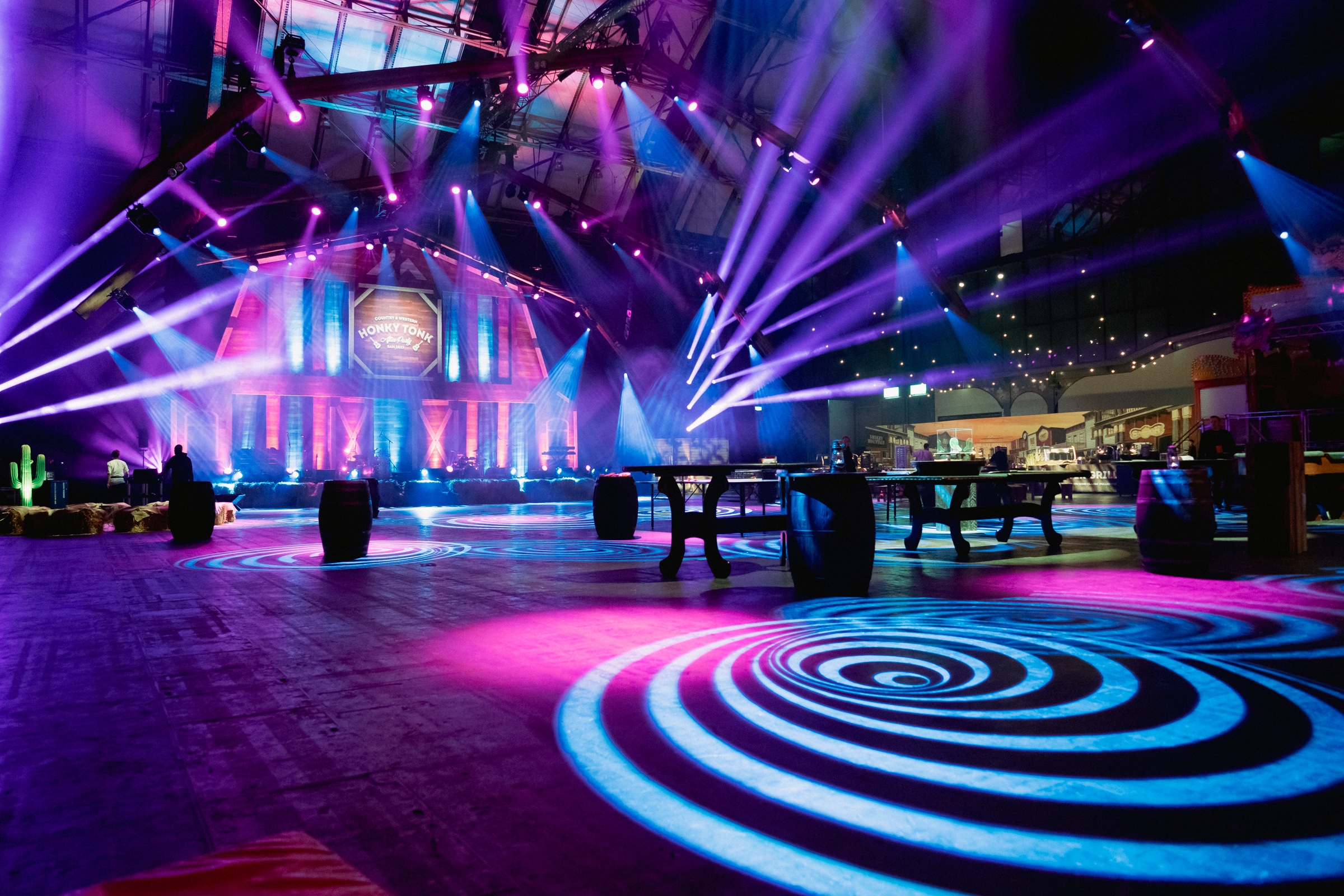
An awards ceremony typically needs production-focused AV and staging: a stage sized for presenters and potentially entertainment, lighting that can shift mood across an evening, screens for award graphics and winner videos, and sound designed for a live show rather than a spoken presentation. Rigging points, where lighting or production equipment can safely be suspended, along with load capacity and power supply, are more commonly critical for awards productions than for a typical presentation-led conference, though exhibition-heavy or broadcast-style conferences can carry similar demands.
Two further technical points are worth checking regardless of format. Ceiling height matters more for awards ceremonies, where truss, lighting rigs, projection, or flown branding may need clearance that a standard conference does not require. Loading access is also worth confirming early, since awards ceremonies often bring in scenic elements, staging, and entertainment equipment that need straightforward vehicle access and a practical route into the room.
If you are choosing a venue that might host either format, ask specifically about production capability, including lighting, staging, and power, since a venue well set up for conference AV is not automatically equipped for a full awards production.
Catering and Guest Experience
Catering priorities shift noticeably between the two event types.
A conference typically needs efficient catering that fits around a working day: morning refreshments, a working lunch, and sometimes an evening drinks reception if the conference runs into the evening. Speed and flexibility around the day’s schedule usually matter more than a formal dining experience.
Many awards ceremonies are built around the meal itself as part of the occasion, typically a plated dinner or a more elevated bowl-food service, with drinks packages that run across the whole evening. Guest experience here is about pacing an entire evening, from arrival and reception through to dinner, the ceremony, and any after-event celebration.
Accessibility, Accommodation and Location
These considerations apply to both event types, but weigh differently depending on the format.
For conferences, accessibility across breakout rooms and exhibition areas matters throughout a full day, and accommodation is often relevant if delegates are travelling from further afield for a multi-day event.
For awards ceremonies, accessibility matters across the entire guest journey of an evening, including arrival, the dining room, and the stage area if winners need to access it. Accommodation and transport logistics are particularly relevant for national awards where guests may be travelling significant distances after a working day.
Choosing the Right Venue-Finding Support
Because conference and awards ceremony venues are evaluated against genuinely different criteria, working with a team that understands both formats helps avoid a mismatch between venue and event. Our awards event services and venue-finding service both draw on the same experienced team, so whichever format you are planning for, the right questions get asked before you commit to a venue.
Frequently Asked Questions
What should you look for in a venue for an awards ceremony compared to a conference venue?
A conference venue needs to prioritise breakout spaces, delegate flow, and presentation AV, while an awards ceremony venue needs a stage with strong sightlines, a banqueting layout, and production capability for a live show format.
What is the difference between cabaret and theatre seating?
Theatre seating faces rows of chairs toward a single focal point with no tables, suiting presentations and keynotes. Cabaret seating uses round or half-round tables facing the stage, suiting events that combine content with networking or dining.
Can the same venue host both a conference and an awards ceremony?
Some venues can support both formats, but this depends on whether the space can be reconfigured between theatre or classroom style for a conference and a banqueting layout with a stage for an awards ceremony, along with adequate AV and production infrastructure for both.
Get Expert Venue Guidance for Your Event
Whether you are planning a conference, an awards ceremony, or comparing the two before deciding on a format, choosing the right venue starts with understanding what your event genuinely needs. Get in touch with Make Events to talk through your event and find a venue that supports it properly.